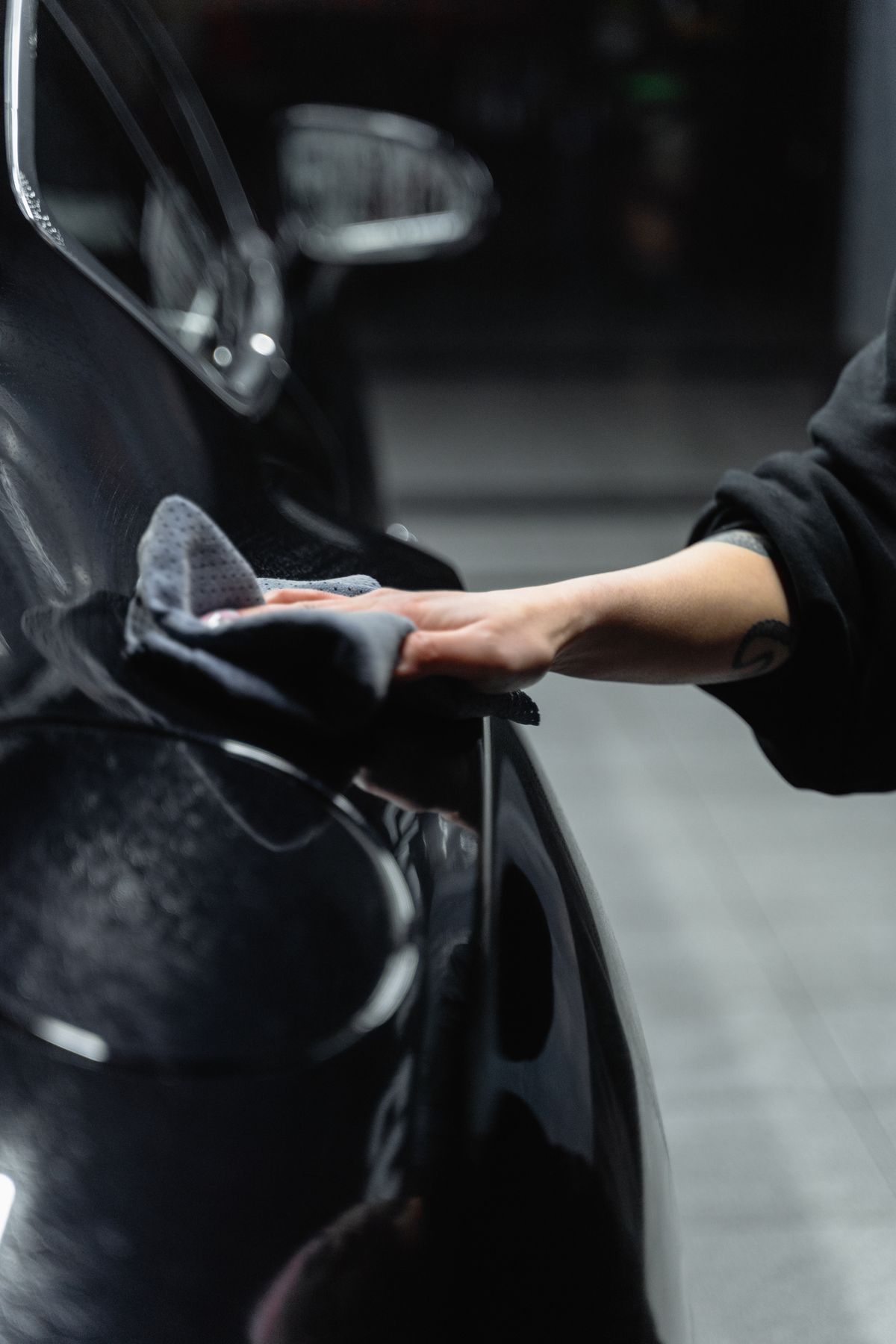
Step by step
- Work in the shade on cool paint. Solvents flash off too fast on a hot panel.
- Wash the area. Remove loose dirt so you are not rubbing grit into the paint.
- Soften the sap. Dampen a microfibre with sap remover or isopropyl alcohol and hold it on the spot for 30 to 60 seconds.
- Wipe gently. Use light pressure and a clean part of the cloth each pass. Repeat as needed.
- Clay if needed. A clay bar with lubricant lifts the last traces and the fine mist around the spot.
- Wash and protect. Rinse, dry and re-apply sealant or wax to the area.
What to avoid
- Scraping with fingernails, razor blades or plastic cards on paint.
- Abrasive kitchen pads or magic erasers, which dull clear coat.
- Leaving strong solvents on trim, rubber or fresh paint.
- Waiting. Sap hardens and can etch the clear coat, especially in summer sun.
Glass is easier
On windows, soften the sap the same way. Glass is much harder than paint, so a new razor scraper held flat on wet glass is safe there. Keep it away from defroster lines and tint film on the inside.
Preventing sap next time
You can't always avoid parking under firs, cedars and maples on the Island. A protective sealant stops sap bonding so firmly, so it comes off in a normal wash. If the whole car has a rough, speckled feel, an exterior detail with clay and the sap and tar add-on will reset it.